Posted on

Church Signs – Key Considerations When Purchasing Them!

Why Church Signs Matter More Than You Think

church-signs-vista-system
Church Signs – Changeable Insert and ADA Signs

Church signs do much more than label rooms or point people in the right direction. They quietly shape how someone feels the moment they step onto your campus. For first-time visitors, signs help remove that awkward feeling of not knowing where to go. For long-time members, they create a sense of order and care that supports everything else happening in the space.

Most churches grow and change over time. Ministries expand, offices move, classrooms shift, and new programs come and go. Clear, thoughtful signage helps all of that change feel calm instead of chaotic. When signs are easy to read and placed with intention, people feel guided rather than rushed.

Church signs also reflect comfort. When someone can easily find the sanctuary, restrooms, or church office, they feel welcomed. That simple experience builds trust. It shows that the church thought about their comfort before they even arrived.

Starting with the Basics of Church Signs

When deciding on the type of signage to purchase, church signs should answer simple questions. Where am I? Where do I need to go next? Who is in this office? When those questions are answered quickly, stress fades away.

Interior church signs, including wayfinding signs, often handle the heavy lifting here. Office doors, classrooms, nurseries, and counseling rooms all need to be signed. When signs are consistent in size and style, the building feels easier to understand. Even large campuses feel manageable with signs that are steady and predictable.

Exterior and entry signs matter too, but interior clarity is what keeps people comfortable once they are inside. Good church signs do not shout for attention. They quietly support the flow of the space.

Church Sign Ideas That Actually Work

When people search for church sign ideas, they are usually trying to solve a real problem. Maybe visitors get lost, staff offices keep changing, or perhaps the building feels outdated.

The best ideas are often the simplest ones. Clean fonts, high contrast, and careful placement go a long way. Signs should be readable from a natural walking distance. If someone has to stop and squint, the sign is not doing its job.

Another helpful idea is consistency. Using the same style across church office signs, classrooms, and directional areas creates a visual rhythm. It helps people learn the building faster. Over time, they begin to trust the signs without thinking about them.

Modern Church Signs and a Fresh Feel

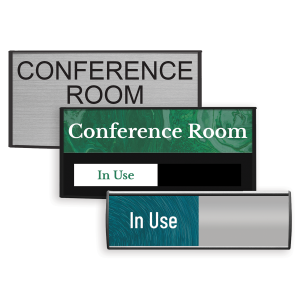
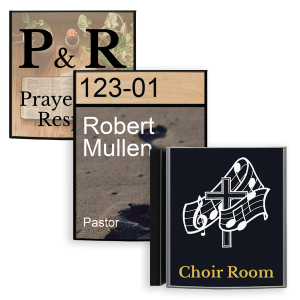
Fortunately, modern church signs do not have to be cold or impersonal. Clean lines, neutral finishes, and straightforward layouts feel welcoming when done right.  With changeable insert signs, you can let your creativity soar!  Vibrant colors, pictures, and graphics can be added to enhance their appeal.  Since it costs nothing to update except for ink and paper, you can update your signs for seasonal or special events to add that extra special touch.

Many churches want to look current without losing warmth. Modern signage helps bridge that gap, avoiding clutter while still feeling intentional. When paired with warm lighting and friendly spaces, modern signs feel calm and supportive.

Modern designs also tend to age better. They do not rely on trendy fonts or decorative elements that feel dated in a few years. This makes them a smart choice for churches thinking long term.

Church Directional Signs and Reducing Stress

Few things create anxiety faster than not knowing where to go. Church directional signs help solve that problem before it starts. They guide people through hallways, around corners, and toward key destinations.

Clear directional signs are especially helpful for larger campuses or multi-building properties. They help visitors feel confident moving on their own. That confidence makes them more open to the experience as a whole.

Good directional signs are placed where decisions happen. Hallway intersections, entry points, and stairwells are key spots. When signs appear right when people need them, everything flows more smoothly.

Church Office Signs and Everyday Clarity

Church office signs may seem small, but are an important part of the church campus. They not only help people get to where they’re going, but they also help staff stay organized as roles and responsibilities change.

In many churches, staff turnover and role changes are part of life. Modular or changeable signs make these transitions easier. Instead of replacing an entire sign, only the name or title needs updating.

This flexibility keeps signage accurate without extra stress. It also keeps the space looking polished at all times, even during seasons of change.

Interior Church Signs and the Visitor Experience

The great news is that interior church signs shape the experience long after someone enters the building. They guide people to worship spaces, classrooms, offices, and common areas. They should feel like part of the environment, with careful consideration given when designing them. Matching colors, finishes, and layouts to the building helps everything feel cohesive. Signs should support the space, not compete with it.

Clear interior signage also supports accessibility. When people of all ages and abilities can navigate easily, the space becomes more inclusive and welcoming.

Custom Signs for Church Spaces

Every church is unique, and signage should reflect that. Custom signs for church spaces offer flexibility in layout while maintaining a unified look. Custom does not have to mean complicated or expensive.

Often, customization is about choosing the right size, layout, and mounting style. It ensures signs fit the space rather than feel forced into it. When signs feel like they belong, people notice the care behind them.

Custom options also allow churches to grow without having to start over. New signs can match existing ones, keeping the visual story consistent.

When It Is Time to Buy Church Signs

When it comes time to buy church signs, it helps to think beyond today’s needs. Think about future growth, evolving ministries, and congregant needs, and how that may impact your sign updates.

Churches that plan ahead often choose systems that allow change without disruption. This saves time and money over the years. It also keeps signage accurate, which protects the overall experience.

Buying signs is not just a purchase. It is an investment in clarity, hospitality, and long-term flexibility.

Bringing It All Together

Church signs may not be the most visible part of ministry, but they support everything else. They help people feel welcomed, oriented, and cared for. They reduce stress and create flow.

From church directional signs to church office signs and interior church signs, each piece plays a role. When signs are clear, consistent, and thoughtfully chosen, the building becomes easier to navigate and more inviting to everyone who walks through the door.

At the end of the day, good church signs fade into the background in the best way possible. They do their job quietly, so people can focus on what really matters.

Posted on

California Restroom Signs – What to Know Before You Buy

Restroom signs rarely spark excitement, however California restroom signs get more mindshare than you might think. These signs become important in many areas, including accessibility law, everyday usability, and the overall impression of your space. When done correctly, no one notices, but when they’re not, it’s a problem.

Being a California-based sign company, if you are responsible for a commercial space, choosing California restroom signs is less about checking a box and more about making a sound operational decision. The simple goal is to keep your space compliant, intuitive, and professional without overcomplicating the process.

Why Restroom Signs Matter More in California

California approaches accessibility with a sharper edge than most states. Enforcement is consistent, and restroom signage is one of the most common inspection points. Inspectors focus here because restrooms serve everyone. Employees, clients, and the general public all rely on them. That reality changes how you should think about signage. A restroom sign is not decorative. It is functional infrastructure. It signals whether your business understands its responsibilities or treats compliance as an afterthought.

Public restroom signs, in particular, tend to attract closer scrutiny. They must work clearly for a wide range of users while meeting specific technical standards. When they do, they quietly support a smooth experience. When they do not, they become a liability.

Making Sense of California Restroom Sign Compliance

ADA compliance sounds intimidating at first. The language feels technical, and the consequences feel serious. In practice, the rules are more practical than they appear once you understand their purpose. California restroom signs must include raised tactile characters and CA Grade 2 Braille. The text must be readable by touch and by sight. Fonts should remain simple and legible. Contrast between text and background must be strong enough to support low-vision users.

Placement matters just as much as design. Restroom door signs typically belong on the latch side of the door, mounted at a specific height range. A sign that looks correct but sits in the wrong location can still fail inspection. When businesses struggle with compliance, it is usually because of small missteps rather than major oversights. Understanding the basics early prevents those problems.

Choosing California Restroom Signs That Hold Up Over Time

California restroom door signs take more abuse than most interior signage. Cleaning crews wipe them down daily, moisture lingers in the air, and people touch them constantly. Over time, cheap materials and poor fabrication will cause deterioration of the signs. Thin plastics warp, printed surfaces fade, and Braille dots lose definition or fall out. Aluminum, acrylic, and photopolymer signs maintain sharp tactile features and resist damage. They also tend to look more natural in professional environments.

Restroom door signs should feel permanent, even if your space changes. That sense of durability communicates stability to anyone who walks through your doors.

Design Choices That Support, Not Distract

Design still matters, even with strict rules in place. A good restroom sign blends into its surroundings while remaining easy to read.

Restroom signs for business environments usually work best when they follow the same visual language as the rest of the space. Clean lines, neutral finishes, and consistent proportions help signage feel like part of the architecture rather than an add-on.  Our Vista System product line is specifically designed to maintain a consistent look and feel throughout a building or campus.

High contrast plays a critical role, specifically with readability. Many California businesses achieve compliance with muted palettes that still meet accessibility standards, assuming the minimum color contrast standards are met.  Here’s a simple ADA Color Contrast Guide to illustrate the point.

When restroom signs match directories, room identification, and wayfinding signs, the space feels organized and builds confidence, even if visitors never consciously register it.

California Restroom Signs and the Bigger Wayfinding Picture

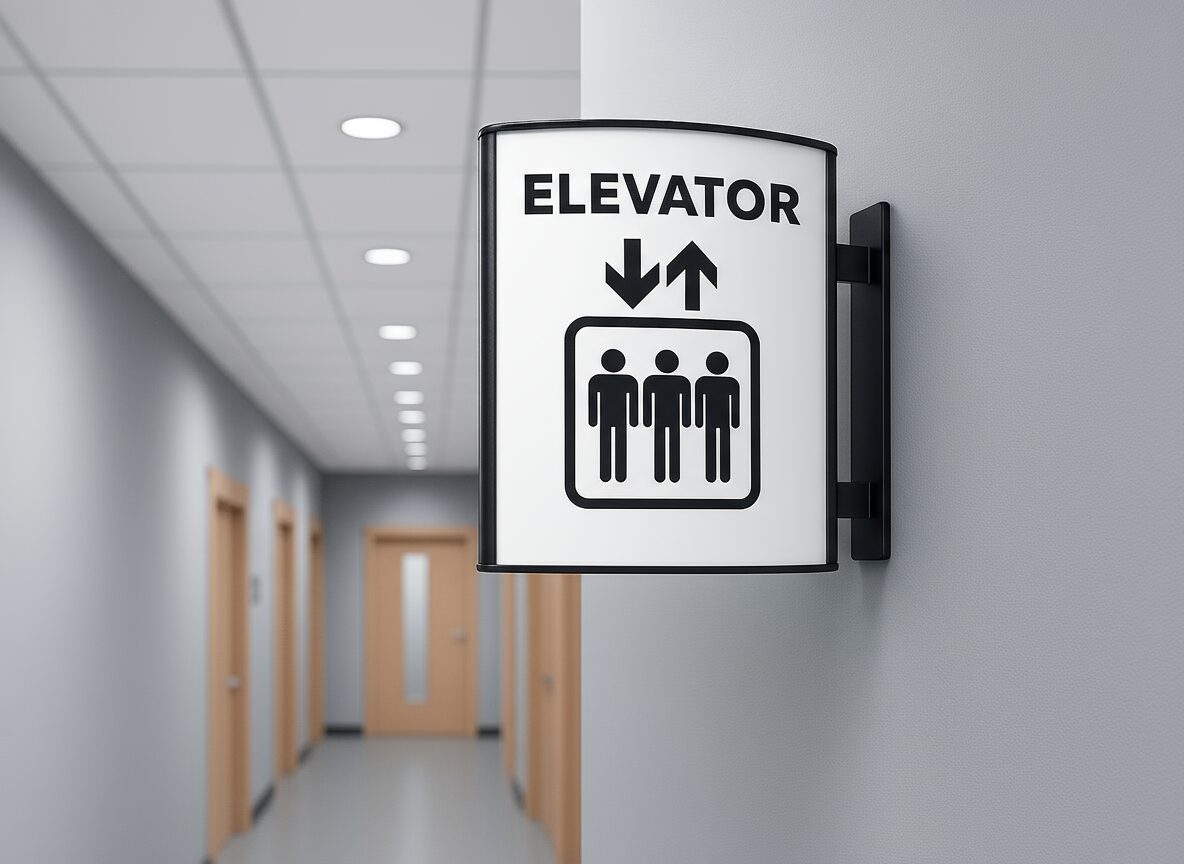
Not all restroom signs live on doors. In larger facilities, signs for restrooms often appear in hallways, near elevators, or at decision points where people choose a direction.  Typically, these are referred to as hallway signs, flag signs, or blade signs.

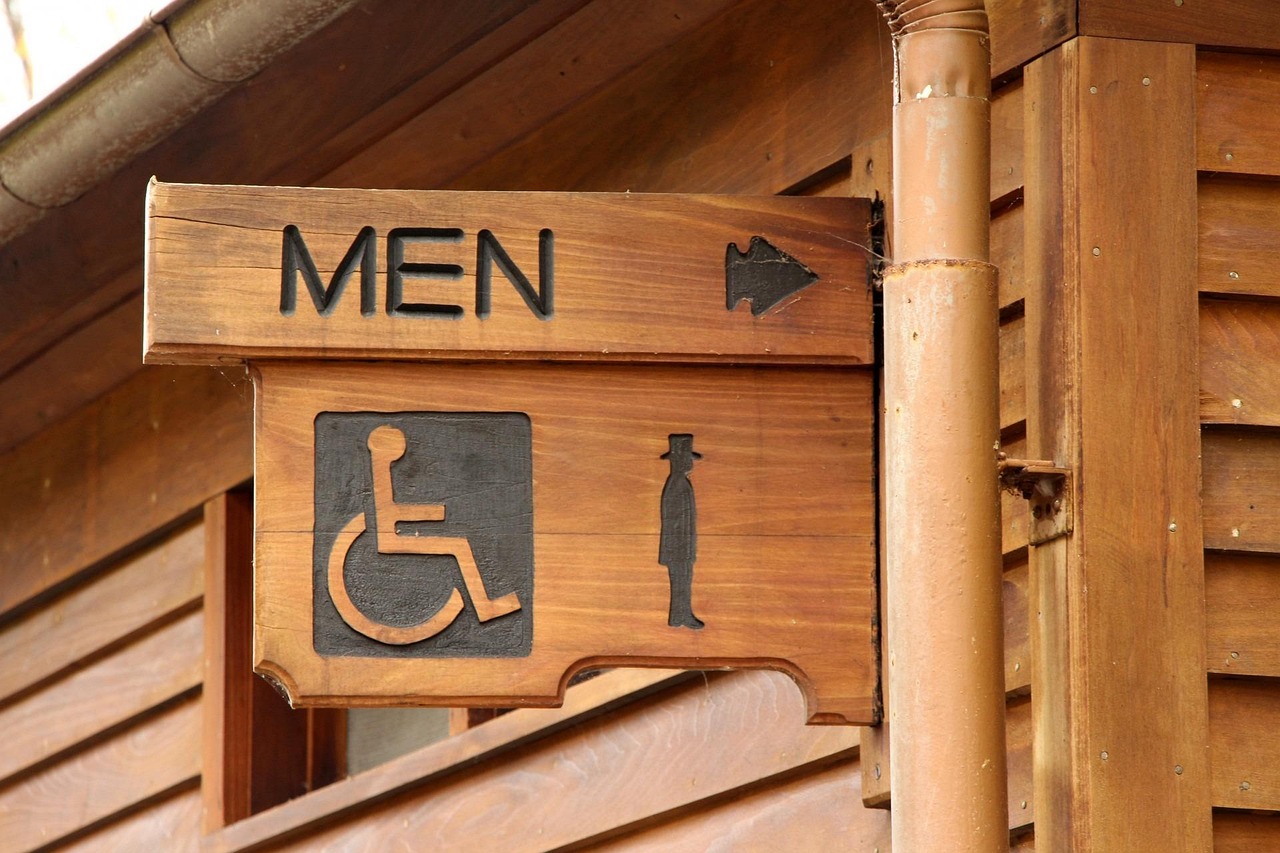
Restroom signs with arrows serve a different purpose than door signs. They reduce friction, prevent wandering, and mitigate interruptions at the reception desk. Clear arrows, readable text, and logical placement do the heavy lifting. When directional signs work well, people reach their destination without thinking about the process.

Public restroom signs benefit the most from this layered approach. Directional guidance paired with clear door identification creates a smooth, seamless customer experience.

Installation Details That Often Get Missed

In California, inspectors often flag incorrectly mounted signs. Before installation, take time to confirm the measurements and the door’s swing direction. Avoid improvising on-site, as small errors here can trigger costly corrections later.  To eliminate any confusion, please refer to the California Title 24 ADA Sign Guidelines for sign specifications and installation standards.

Many business owners now choose modular systems designed to simplify installation and replacement. These systems protect walls, reduce labor, and make future updates easier. Please reach out at any time should you have questions regarding installation tips and tricks.

Common Errors That Still Cause Problems

ADA compliance for customer-facing areas is critical. Serif or decorative fonts occasionally show up in tactile lettering. Low-contrast color choices look appealing but fail accessibility standards. Signs get mounted on the wrong side of the door or too far from the frame.

Another issue involves inconsistency. Businesses replace one sign at a time without matching existing signage. Over time, styles clash. That visual fragmentation often reflects rushed decisions rather than careful planning.

Avoiding these problems usually comes down to selecting signage designed specifically for regulated environments. Generic signs adapted later tend to cause trouble.

Planning for Change Without Replacing Everything

california-restroom-signs-title24
CA Restroom Signs

Modular signage systems allow face inserts to change without replacing the entire sign body. Over time, this approach reduces costs and maintains consistent signage. It also minimizes disruption during renovations or tenant changes.

This flexibility proves especially valuable in offices, medical facilities, and multi-tenant buildings where change is routine rather than rare.  This is true for routine changes, branding changes, remodels, or new construction.

A More Practical Way to Approach Buying California Restroom Signs

Choosing restroom signage does not need to feel overwhelming. Start with compliance, then usability, and finally design. When those three elements align, the right choice becomes clear.

California restroom signs should quietly and reliably support your business. They should meet legal standards, guide people effectively, and reflect the care you put into your space.

When you approach restroom signage with intention rather than urgency, you protect your business and improve the experience of everyone who enters your space. That attention to detail may go unnoticed most days, which is exactly the point.

Posted on

Why Changeable Door Signs Make Smart Business Sense

In talking with administrative personnel who manage office, campus, or commercial buildings, they clearly know how often names, titles, and departments change. They also know how much those small changes can quietly cost over time. Door signs, and signage in general, are not a one-time decision. Instead, they are part of an ongoing system that either supports your business or drains resources.
The goal is not just to label a door but to do so in a way that remains professional, flexible, and financially sound. To that point, changeable door signs earn their reputation as the most cost-effective signage option. As many experienced decision-makers do when weighing long-term value, the following represents the thought process they go through.

1. Door Signs Reduce Replacement Cost

At first glance, a basic door sign may seem inexpensive; however, the real cost shows up later. Each time a name or room function changes, the entire sign must be replaced, which, over time, adds up quickly.  Changeable door signs solve this problem by separating the frame from the insert/information itself. The frame stays mounted, while only the insert changes. As a result, you don’t have to pay for a new sign every time someone moves offices or changes their name or title. Instead, you are replacing a simple insert at a fraction of the cost, making sign maintenance simple and cost-effective. Using changeable, modular office signage, many businesses recover the initial investment within the first few updates. From that point forward, the savings continue to compound.

2. They Match the Reality of How Offices Operate

Business offices are dynamic environments. People get promoted, teams expand, and departments reorganize. When signage cannot keep up, confusion follows.  Door signs designed to be changeable align with how businesses actually operate. Updates can happen as needed, not when the budget allows for a full replacement. This flexibility keeps your space accurate and easy to navigate.  In addition, this approach helps businesses stay organized without creating unnecessary friction. Instead of delaying updates or settling for temporary fixes, changes happen cleanly and on schedule.

3. Sign Updates Are Simple and Can Be Done In-House

Another factor many decision makers overlook is the cost of installation. Traditional door sign updates often require outside help from a local sign company. Scheduling installers, approving invoices, and coordinating access all take time.  With changeable door signs, updates are straightforward. In most cases, inserts slide in and out without tools. In others, such as Vista System door signs, the clear lenses are removed with a suction cup.
With this type of system, administrative or facilities staff can handle changes in minutes, saving money on installation and avoiding downtime. More importantly, your team stays in control of the process, which is invaluable, especially in fast-moving environments.

4. Door Signs Project and Protect a Consistent Brand Image

The other advantage is maintaining brand consistency. Mismatched door signs or temporary labels send the wrong message, making even well-run organizations appear disorganized.  Changeable door signs maintain a uniform look across your space, so when names or titles change, the visual presentation stays consistent. This reinforces professionalism for employees, visitors, and clients.  For businesses that invest in custom door signs, this consistency is especially important. The frame becomes part of the architecture, while the insert handles the variable information. That balance keeps your brand intact without constant redesign costs.

5. Changeable Signs Scale as Your Business Grows

Growth is a good problem to have, but it often exposes weak systems, and signage is one of them. When each door sign is treated as a standalone item, expansion becomes expensive and messy.  Changeable door signs offer a scalable solution, meaning the same system can be used across offices, floors, or buildings. Our Vista System suite of wayfinding signs maintains that same look and feel with cubicle, projecting, directory, and other sign types to complement our door signs.  Consequently, ordering becomes simpler, and planning becomes easier. Door signs for office environments benefit from this consistency, especially in multi-tenant or multi-department settings.

6. Minimize Disruption During Changes

Factors such as noise, dust, and interruptions affect productivity. While traditional sign replacements often involve removing hardware and repairing walls, changeable door signs avoid that disruption. Since the frame remains in place, updates are quiet and clean, and work continues without interruption.  This benefit may seem small at first; however, over the years, it makes a noticeable difference. Employees stay focused, and facilities teams avoid unnecessary maintenance tasks.

7. Changeable Door Signs Support Long-Term Budget Planning

Predictable costs make planning easier. When signage updates are expensive and irregular, they are often delayed. That leads to outdated information and poor wayfinding.  With changeable door signs, costs are predictable and manageable. Inserts can be stocked or ordered as needed. Budgeting becomes simpler because updates are no longer a major expense.  This predictability is one reason many organizations standardize on changeable systems early. It removes uncertainty and supports better long-term decisions.

8. Adapt to Multiple Use Cases

A single door may serve different purposes over time. Offices become meeting rooms. Storage areas become workspaces. In healthcare or education, room functions change frequently.  Changeable door signs adapt easily to these shifts. The same frame works for names, titles, or room functions. Only the insert changes.  This adaptability is especially useful for organizations that value flexibility.

9. They Balance Customization and Control

Many businesses want signage that reflects their brand while still being practical. Custom door signs deliver that balance when paired with a changeable system.  The frame and layout can be customized to match your brand standards. Fonts, colors, and materials stay consistent. Meanwhile, inserts handle the variable information.  This approach gives you control without locking you into expensive replacements. It is a smart compromise between design and efficiency.

A Practical Investment That Holds Its Value

door-signs
Vista System Door Signs
From a global perspective, changeable door signs are not just a signage choice but rather a system that supports how businesses grow and change.  They reduce replacement costs, simplify updates, and protect your brand. They also scale with your organization and minimize disruptions.  Investing in modular signs that are designed to adapt is a sound decision. Over time, it pays for itself and keeps your space looking polished and professional.
Please give us a call or request a quote if you’d like more information on how we may help you with your signage needs!
Posted on

Choosing the Right Bathroom Sign for Your Office

Top 5 Factors to Consider When Buying Bathroom Signs for Your Office Building

Choosing the right bathroom sign seems like a simple task, but it plays a real role in how people move through your building and how they feel in the space. When your signs look sharp and consistent, you send a message that your office is organized and well cared for. You also avoid confusion and meet accessibility requirements without stretching your budget. With a bit of planning, you can create a clean, professional look that lasts.
Below are five factors to help you choose bathroom signs that look great and remain cost-effective.

1. Look for Visual Harmony Between Your Bathroom Sign and Your Interior Design

A bathroom sign should blend naturally with your office’s style. Consider the materials, finishes, and colors already in your building. A brushed aluminum sign frame works well in a modern space, while a warm acrylic or wood accent complements traditional interiors.
Think about what your visitors notice as they walk through the halls. A sign frame that aligns with your interior design pulls the whole look together. This is the reason why many offices choose architectural frames or message holders. You may customize them to the office decor while maintaining your initial investment.  The same holds true if tastes change or if new corporate branding initiatives are launched.
If you want something more flexible, a modular bathroom door sign lets you update information as needed without replacing the entire frame. This approach keeps you ahead of the curve, your space fresh, and costs predictable.

2. Make ADA Compliance a Priority

Your bathroom signs need to be accessible to everyone.  The ADA rules provide a clear, simple roadmap. When your signs meet the guidelines, you help every visitor navigate your building with ease.
Think about contrast, tactile lettering, and the placement of Braille. Proper positioning matters too, and many teams overlook ADA requirements for ADA bathroom sign height. Getting the height right protects you from compliance issues and ensures that people can locate the sign quickly. It helps to choose ADA bathroom signs that already include raised characters, Braille, and strong contrast. This keeps you compliant while keeping your design clean.
Today’s ADA-compliant options come in styles that fit almost any interior, so you do not have to sacrifice aesthetics to meet the rules.

3. Choose The Right Materials

Your bathroom signs need to handle frequent use and daily cleaning. Acrylic, aluminum, and high-pressure laminate remain popular because they offer durability without driving up costs.
Also, think about where each sign will live. High-traffic hallways, shared restrooms, and public areas can wear down lower-quality materials fast. When you invest in something well-built, you will not need to replace it as often. That keeps your long-term cost lower and helps maintain a polished look throughout your building.
If your office experiences steady turnover or frequent reorganization, modular frames work especially well. You only change the insert rather than buying a full replacement.

4. Look for Bathroom Sign Systems You Can Update Easily

When office space evolves, your signage needs to evolve with it.  One solution that adapts without adding extra cost is a combination of a modular latch and a bathroom door sign. By simply swapping an insert, you can effect a layout change, renovation, or department update. It keeps your look consistent and saves time.
Choose frames or holders that make maintenance quick and easy. Doing so will allow your staff to focus on tasks that matter rather than basic blocking and tackling.

5. Balance Cost With Total Long-Term Value

ADA Bathroom Signs
ADA Bathroom Sign Collection

It is easy to look only at the price tag, but the real goal is long-term value. The cheapest option can end up costing more if you need to replace it every year.

When looking at this, consider durability, compliance, and flexibility. An ADA-compliant sign that requires less maintenance is exponentially more cost-effective. This reduces waste, simplifies updates, and avoids having to initiate large replacement orders. Look at the lifetime cost rather than the upfront number. When you do, simple math will dictate which way to go.

So What is the Conclusion?

Choosing the right bathroom sign is a chance to improve your office environment without stretching your budget. When your signs look coordinated, comply with ADA rules, and withstand daily use, they improve the entire space. Visitors will feel more at ease.
With these five factors in mind, you can select signage that is stylish, practical, and cost-effective. If you want help choosing the right system or exploring modular options that fit your interior design, I can put together a tailored recommendation.
Posted on

Office Signs: Typical Prices, Cost Drivers & Buying Tips

How Much Can I Expect to Pay for Office Signs?

If you’re planning to refresh your office signs, the first question is cost. Prices vary more than most people expect, and the ranges can feel unclear if you’re not familiar with the types of signs used in modern workplaces. Once you understand how materials, size, design, and function affect pricing, the numbers become much easier to predict. You gain a clear view of what you should pay and which options offer the best value for your space.

This guide breaks down what businesses typically spend and explains why modular aluminum frames continue to lead the market. These systems offer durability, flexibility, and long-term savings across all industries.

Why Pricing Varies So Much

Office signs support navigation, branding, and organization. They also need to look consistent throughout your building. These needs create a wide pricing spectrum.

Material is one of the biggest drivers. Standard aluminum architectural frames fall right in the mid-range. They’re durable, professional, and used in corporate offices, hospitals, schools, government buildings, and small businesses. Size also matters. A simple 2-by-8-inch nameplate sits at the low end, while a larger door sign with a changeable insert system will cost more.

Design choices can influence cost, too. Many buyers assume custom office signs always require a large budget. In truth, most offices do not need full custom fabrication. They need flexibility. Modular frames provide that flexibility and give you a polished look at a reasonable price.

What Most Businesses Pay for Office Signs

Most workplaces choose mid-range aluminum frames because they balance quality and cost. These are the signs you see on office doors, hallways, meeting rooms, and shared spaces.

Here is what you can expect to pay:

Small office signs: Usually $20-$45. These include nameplates, workstation markers, and small room signs.

Medium office signs: Usually $40 to $80. These include changeable insert frames, department signs, and basic directional signs. Since the frame stays on the wall, you replace only the insert when something changes.

Large office signs: Usually $75 to $ 150. These work well for conference rooms, shared areas, and spaces that need higher visibility.

Because aluminum holds its shape and finish for years, you get long-term value that lower-cost plastic signs can’t match.

Why Modular Office Signs Reduce Long-Term Costs

Businesses across industries rely on modular office signs because they solve a common challenge. Names change. Roles shift. Rooms get repurposed. Paying for new signs every time becomes expensive and slow.

Modular frames keep that cost in check. The hardware stays on the wall. You swap the insert. Most inserts can be printed in minutes on a standard office printer. The update process is quick, simple, and budget-friendly.

These long-term savings are the reason modular office sign frames remain the top choice for schools, medical offices, corporate campuses, and government facilities. A sign purchased today may not need new hardware for years. You control the updates and avoid unnecessary spending.

What Affects the Price of Office Signs

Several factors shape the final price of office signage. Knowing these helps you estimate your total project cost.

Size: The larger the frame, the higher the material cost.

Insert configuration: Single-insert signs cost less. Multi-slot signs that hold several names or departments cost more.  Paper inserts are less expensive than acrylic inserts.

Finish: Brushed aluminum is the most common finish. Other anodized finishes add visual variety without increasing the price.  Frames may be custom-painted or powder-coated for an additional cost.

Mounting style: Frames can be mounted with wall anchors, tape, Velcro, pins, silicone, or a combination of them.  It’s a nominal cost, but you can do it for free if you have the materials.

Quantity: Ordering larger quantities of office signs at once lowers the per-unit price.

These are the primary factors that affect the pricing structure for modular office signs.  Highly customized office signage with complex design criteria are not considered in this pricing discussion.  We’ve addressed that in the next section.

Are Custom Office Signs Worth the Investment?

Custom office signs can be quite expensive, and most offices neither want nor need full custom builds. Standard aluminum frames offer a clean, modern look without the higher cost associated with fully custom fabrication. They deliver the style most offices want while keeping the project within budget.

Unless you need lighting, unique shapes, or specialty materials, mid-range modular signs are usually the smartest choice.

Typical Pricing by Industry

Every industry uses office signs for slightly different reasons. Here is what buyers in common sectors usually spend.

Education: Schools use office signs for classrooms, staff offices, and labs. They usually pay $40-$80 per sign. Frequent staffing changes or room repurposing make modular systems ideal.

Healthcare: Clinics and hospitals rely on office signs for clarity and organization.  Helping customers reach their destination quickly is essential. Signs often range from $50 to $90. Readability is also critical.

Architects and contractors: These groups choose office signs that complement the space’s design. Pricing usually falls between $45 and $100.

Government: Agencies value consistency and clear wayfinding. Most office signs cost between $40 and $85.

General business: Most offices want clean, professional signs without overspending. Their range usually sits between $30 and $80.

Across all sectors, modular aluminum frames provide durability, flexibility, and strong long-term value compared to custom office signs.

The Hidden Savings Most Buyers Miss

The biggest advantage of modular office signs is their low cost to update. Instead of ordering a new sign, you simply print a new insert and slide it into place. There are no design fees, no hardware costs, and no shipping delays. You also don’t have to repeatedly call the local sign shop to get it done.  Over time, the maintenance savings are significant.

How to Get a Fast and Accurate Quote

Office Signs
Changeable Office Signs


When you’re ready to buy office signs, you may request a quote online or call our toll-free number. We’ll help you choose the right sizes, finishes, and configurations. You’ll receive accurate pricing and guidance tailored to your exact specifications.

A short conversation can save you both time and money. Once we know your layout, we recommend a mix of office signs that fit your needs.

Key Takeaways

Office signs play a key role in defining your workplace. Understanding the pricing structure and the long-term benefits of modular aluminum frames makes the buying process much easier. You get signs that look professional, stay consistent, and adapt as your space or branding evolves without ever having to buy new signage!

We’re here to help, so please reach out anytime. We can walk you through options that match your budget, timeline, and future planning needs.

Posted on

Top 5 Reasons Hallway Signs Improve Wayfinding for Offices

When people walk into your building, they expect to find their way without having to guess. Well-positioned hallway signs make that possible. They help staff, clients, and visitors move through your space with confidence. They also support a more organized and intentional environment. When hallway signs are planned well, they do more than direct traffic. They improve safety, support efficiency, and reduce the subtle friction that slows down a workplace.
 
Below are five practical reasons hallway signs matter, with insights that apply to offices, schools, clinics, churches, and other growing organizations.
 

1. Hallway Signs Improve Navigation and Reduce Wayfinding Friction

Every business wants people to move through its space without hesitation. When someone pauses because they’re unsure where to go next, even a small delay adds up. Hallway signs solve that problem by providing clear direction at key decision points. These include corridor intersections, long hallways, and areas with multiple adjacent rooms.
 
Hallway directional signs guide visitors from entry points to offices, departments, meeting rooms, and service areas. This makes the experience smoother for everyone. Even in familiar buildings, people appreciate cues that confirm they’re heading in the right direction. This is especially helpful in busy environments where employees don’t always have time to escort guests.
 
Many businesses use a mix of hallway room signs, hallway door signs, and a hallway projecting sign to ensure visibility from different angles. A projecting sign is useful when someone approaches from the side or when the hallway makes a turn. Churches also rely on church hallway signs to direct families to children’s areas, volunteers to workrooms, and guests to worship spaces. Clear signage prevents confusion and helps visitors feel welcome.
 
Custom hallway signs offer another advantage. They align with your building’s flow and aesthetic. When each hallway sign is designed with purpose, navigation feels natural and intuitive.
 

2. They Reinforce Branding and Create a Polished Impression

Wayfinding is only part of what hallway signs can do. They also help shape how people experience your brand. When signs share consistent colors, fonts, and layouts, they convey a message that your business values detail. People notice when signage is mismatched or outdated, even if they don’t mention it. It influences how they view your professionalism.
 
Hallway signs for offices often include subtle branding elements, such as matching colors or logo placement. This gives the space a cohesive look as visitors move from one area to the next. Small and medium-sized businesses benefit from this because it signals stability and confidence.
 
A hallway sign holder that works with your brand style offers flexibility. You can update inserts as room names change or departments shift. This keeps your signage current without requiring a frame replacement. It’s an easy way to maintain a polished look over time.
 
Church hallway signs offer another example. Churches use hallways to connect classrooms, volunteer areas, staff offices, and gathering spaces. Branded signage enhances the environment and communicates a warm, unified message to members and guests.
 

3. Support Safety, Compliance, and ADA-Friendly Navigation

Safety is a major part of wayfinding. Hallway signs help people quickly reach exits, stairwells, restrooms, and emergency equipment. When signs are clear, people know where to go in routine and urgent situations. This is critical in schools, clinics, and medical offices, where visitors may feel stressed or unfamiliar with the layout.
 
ADA-compliant hallway signs enhance accessibility for individuals with visual or mobility impairments. When hallway signs use proper contrast, tactile characters, and compliant placement, they create a more inclusive environment. A hallway sign near each door helps visitors understand the functions of the rooms without needing assistance.
 
Clinics and hospitals rely heavily on hallway directional signs to keep people out of restricted areas and guide them toward treatment rooms. Smaller medical practices can also benefit from this approach, improving workflow while reducing interruptions.
 
A hallway projecting sign can also support safety. Because it extends from the wall, it’s visible even in crowded or fast-moving situations. Quick visibility reduces hesitation, which makes navigation easier and safer.
 

4. Build Visitor and Customer Confidence

People feel more at ease when they understand their surroundings. Clear hallway signs help create that sense of confidence. Visitors trust the environment when they know where they’re going. They can move with certainty instead of feeling lost or unsure.
 
Consider a visitor in a professional office. They may not know where the reception area is or how to reach a conference room. Hallway signs for offices remove that uncertainty and help them settle in faster.
 
Church hallway signs offer the same support. Families want to drop off children with confidence. Guests want to move from one area to another without feeling out of place. Volunteers need to navigate the building without stopping to ask for help. Effective signage creates a predictable flow that boosts trust.
 
This confidence extends to your team. When visitors use hallway room signs and hallway door signs to guide themselves, staff members spend less time giving directions. They stay focused on their work, which strengthens productivity.
 
Custom hallway signs further enhance the experience. They match the building’s personality and show that you take pride in the details. When people notice that level of care, it strengthens their view of your organization.
 

5. Hallway Signs Streamline Daily Operations and Reduce Interruptions

Clear signage helps your business run more smoothly. When people know where to go, they reach their destination faster. That reduces interruptions, minimizes confusion, and keeps the day moving forward.
 
Many small and medium-sized businesses depend on hallway signs to direct people to conference rooms, work areas, meeting spaces, and administrative zones. In these environments, well-placed hallway signs make daily operations more efficient.
 
Schools and clinics see this firsthand. Students, parents, and patients rely on hallway directional signs to navigate to their destinations. Without them, staff would spend a significant amount of time pointing people in the right direction. That time adds up.
 
A hallway sign holder with interchangeable inserts provides flexibility as your space evolves. You can adjust room names, schedules, or department labels without needing new frames. This keeps your building organized as things change.
 
Even a hallway projecting sign can make a difference. When someone turns a corner, the projecting sign becomes visible immediately, reducing the likelihood of missed turns. This small improvement supports a more efficient flow.
 
Hallway signs also help new employees become familiar with the layout. They can navigate without relying on coworkers for constant guidance. This speeds up onboarding and reduces confusion.
 

The Net Result of Using Hallway Signs Effectively

hallway signs
Suite of Vista Hallway Signs
Hallway signs offer more value than many businesses realize. They guide people clearly, support your brand, improve safety, and create a better experience for everyone who enters your building. They also reduce interruptions, allowing you to focus on your job and not direct traffic.
 
We typically start with a walkthrough or assessment with the client, but you can do it yourself. Walk your hallways, look for decision points, and identify areas where hallway signs can improve clarity. Thoughtful signage is a smart investment that strengthens your brand and supports a more efficient workplace.
Posted on

How Directory Signs Empower Simplicity in Dynamic Spaces

Sign Frame Workspace

In any bustling workplace, campus, or facility, change never stops. Departments move, new tenants arrive, conference rooms get renamed, and entire spaces evolve to serve fresh purposes. So should your directory signs!

If you’re responsible for keeping people oriented, whether you’re managing a multi-building corporate campus, healthcare facility, or university, you know how critical clear wayfinding is to daily flow. You also know how frustrating it can be when signage can’t keep up.

That’s where modern directory signs come in.  These are not just labels on walls but smart systems designed to evolve with your environment, reflect your brand’s professionalism, and simplify facility management.

At Sign-Frame.com, we believe in empowering organizations with signage that adapts as fast as you do, that is clear, flexible, and simple to maintain.

Directory Signs and the Need for Adaptable Wayfinding

Let’s be honest, traditional signage often creates more work than it saves. Every change means another phone call, explanation, redesign, and reinstallation.  Even when things go smoothly, and they seldom do, those little updates add up to big headaches while taking away valuable time away from your customers.

Modern organizations, however, are built on agility. Your spaces are reconfigured for new functions. Teams expand, contractors rotate in and out, and project names shift monthly.  This is especially true with agile workspaces and distributed workforces spending part of the week in the office.  With that being the case, why should your directory signs stay static?

Changeable insert systems are the game-changer here. They make it easy to update tenant names, room labels, or department listings in minutes with no special tools or outside vendors required.

This isn’t just about convenience; it’s about maintaining clarity and professionalism in an ever-changing environment. Outdated or inconsistent signage sends a subtle message of disorganization. But a directory system that stays sharp and accurate tells everyone, from staff to visitors, that your facility runs with precision.

Signage That Evolves with Your Environment

A truly great sign system doesn’t just mark locations but rather communicates reliability and care. It’s part of your brand experience, a silent ambassador that reinforces your values.

When someone walks into a well-signed space, they feel oriented, confident, and respected. They don’t need to ask for directions or second-guess where they’re going. That seamless navigation experience is what transforms ordinary facilities into professional environments.

Directory signs are a perfect example of how simplicity and design can work together to create that effect. These systems are:

  • Flexible: Change inserts easily when departments move or tenants change.
  • Sustainable: Reuse and recycle inserts, reducing waste.
  • Scalable: Perfect for both small offices and sprawling campuses.
  • Professional: Clean, modern designs align with any architectural aesthetic.

At Sign-Frame.com, we offer modular systems that grow with your needs whether you’re managing one building or twenty. They help you adapt quickly while keeping your facility looking sharp and consistent.

Recognizing the People Behind the Signs

Let’s take a moment to talk about the people who make all of this happen, namely, the facility and maintenance teams who keep buildings running like clockwork.

These professionals often work behind the scenes to ensure that every space functions flawlessly. Updating a single directory sign might seem like a small task, but it’s part of a much larger effort to maintain order and efficiency across your property.

When facility managers have access to signage systems that are intuitive, reliable, and easy to update, they can focus on higher-impact priorities instead of wrestling with outdated, rigid systems.  These people value their time and know that changeable systems give them the luxury of putting that time where it’s most needed.  Changeable insert directories don’t just simplify signage, they empower the people maintaining them.

By choosing adaptable, modular signage, you’re making a statement that you value your team’s time, your visitors’ experience, and your organization’s professionalism.  That’s why we designed our modular directory frames with quick-change functionality because we believe every facilities team deserves tools that make their jobs easier, not harder.

The Power of Clarity and Consistency with Directory Signs

Think about your own experience walking through a well-organized building, one where every department, conference room, and office is clearly marked. You immediately feel that the organization is efficient and trustworthy.

Now imagine walking through a space where the signage doesn’t match, or the directories still list old tenants, or there are pieces of tape or paper listing the new tenant names. It’s a subtle difference, but the impression it leaves is powerful.

In a world where first impressions matter, clarity builds trust. Reliable signage doesn’t just help people find their way.  It reflects how your organization operates.

The reality is directory signs are small details with massive impact. They tell visitors, “We care about precision, we care about people, and we’re on top of the details that make your experience smoother.”  That’s why so many businesses and campuses are switching to architectural directory systems that maintain this clarity through every update and reconfiguration.

Building Trust Through Reliable Signage

At their core, directory signs are more than wayfinding tools, they’re trust builders.  They guide people confidently, demonstrate organizational consistency, and support your brand’s reputation. When updates happen seamlessly and your signage always looks accurate and polished, it sends a powerful message: “We’re reliable. We care about your experience here.”

Changeable insert systems reinforce that trust because they ensure every sign across your facility remains accurate, professional, and consistent. Every time a visitor finds their way without confusion, or a tenant notices their new business name appear promptly, you’ve strengthened their confidence in your organization. It’s small details like these that separate average facilities from exceptional ones.

If you’re ready to bring that level of clarity to your space, check out our Directory Sign Catalog for modular systems that blend elegance, durability, and effortless functionality.

Why Simplicity Wins in Signage Design

One of the most common misconceptions in signage design is that complexity equals quality. But in truth, the best systems are those that make life easier for both users and maintainers.

At Sign-Frame, our philosophy is simple: the easier your system is to update, the longer it remains accurate and the more value it delivers.

Simple doesn’t mean basic; it means strategically designed to perform without friction. It means every element, from the aluminum frame to the end caps to the insert, is built for clarity and ease of use.

This is especially important for organizations with frequent changes. Whether you’re managing multiple departments, rotating tenants, or large-scale facilities, your signage needs to be nimble. When your sign system supports that kind of flexibility, you’re not just managing spaces, you’re “future-proofing” them.

Sustainability and Scalability of Directory Signs: The Smarter Way to Sign

Simplicity also aligns beautifully with sustainability.

Our insert-based systems reduce waste by allowing you to update content without replacing entire signs. It’s a smarter, greener approach that aligns with the eco-friendly initiatives of today’s most forward-thinking organizations.

Plus, scalability means you can start small, perhaps outfitting one building or department, and expand your system as your organization grows. Each frame, finish, and insert integrates seamlessly, creating visual harmony across your entire facility.  This modular design philosophy keeps your investment efficient, flexible, and aligned with your long-term goals.

The Unsung Hero of Facility Management

Here’s a truth every experienced facility manager knows; when signage works, nobody notices it.

That’s because great signage blends into the environment, guiding people effortlessly, reducing confusion, and keeping operations running smoothly in the background.  But when signage doesn’t work, when it’s inconsistent, outdated, or unclear, everyone notices.

That’s why directory signs are one of the most impactful tools in any facility manager’s toolkit. They eliminate daily friction, simplify navigation, and keep your environment professional and aligned.

Bringing It All Together: A System That Works as Hard as You Do

Your environment changes constantly, and your signage should be ready to keep up.

By investing in adaptable directory signs, you’re doing more than managing wayfinding; you’re creating an ecosystem of clarity that supports your people, your visitors, and your brand identity.

If you’re ready to simplify the way your facility communicates, explore our directory sign systems today and make clarity your competitive advantage!

Posted on

The 5 Most Popular Office Signs. Number 3 is a MUST!

It’s sometimes intimidating trying to find the ideal office signs for your business given the amount of options from which to choose.  You first have to pick the right sign frames and then you have to decide what type of inserts to use.  I thought I would take some of the more frequently ordered signs and briefly describe why I believe most people tend to gravitate towards them.  I’ll also take a few minutes afterwards to talk about Vista System office signage in general, including the features common across the entire product line which may help further explain why customers like these particular sign frames.

  1. WFFP2U    – Dimensions 3″H x 5.25″W.
  2. WFFP16U  – Dimensions 6″H x 6″W
  3. WFFP17U  – Dimensions 6″H x 6″W with a 2″ ADA header
  4. WFP1U      – Dimensions 2″H x 4″W
  5. WFP84U    – Dimensions 11″H x 8.5″W


The WFFP2U is the smallest and most economical of the flat product line.  The WFFP16U sign frame is one of the more popular office signs because it’s ideally sized for insert content with an attractive price point.  The WFFP17U is identical to the 16U but is a two-part sign frame with a two-inch ADA header.  The flat portrait office signs in general have become increasingly popular for the above reasons.

The WFP1U is the most cost effective of the office door signs.  Unlike the other three listed so far, the WFP1U is from the curved product line.  Since the curved line is LEED certified I believe this may be another contributing factor to the curved line popularity.  Finally, the WFP84U sign frames accommodate 8.5 x 11 letter-size inserts which make it an ideal solution for people who like to do-it-yourself.

Overall I believe people choose office signs from Vista System because they are competitively priced, aesthetically pleasing and most importantly, are extremely easy to maintain.  There are others too but maintaining your office door signs, for example, can be very costly downstream due to promotions, attrition, etc. By using paper inserts you can print new office door signs in minutes for a fraction of the cost of having to call your local sign company.

If you would like a free sample please let us know and we’ll send you one just for the asking.  We value your business and opinions so please comment on our blog or any of our other social channels.

Posted on

18 Essential Railway Sign Frames

Vista System produces a wide variety of both interior and exterior sign frames specifically designed for train stations or railway systems.  This includes everything from wayfinding signs for lobbies, to platform signage and parking signs all the way down to directory and restroom signs.

Here are 18 essential railway sign frames that every station or rail system should have.  We’ve omitted the pictures and detail of the following signs from this post but we’d be happy to send you the link if you contact us for this information.

  1. Station Name
  2. Platform Number
  3. Train Schedule
  4. Advertisements
  5. Digital Information Sign
  6. Exit Signage
  7. Railway Map
  8. Central Station Wayfinding Sign
  9. Restroom Signs
  10. Wayfinding Suspended Sign
  11. Price List Directory Sign
  12. Tickets Cashier
  13. Train Route Illuminated Map
  14. Wayfinding Flag Sign
  15. Long Term Parking
  16. Disabled Parking
  17. Route Map
  18. No Smoking

With the Vista System Modular Curved Frame Technology (MCFT) and full suite of sign frame products available almost any type and size of sign can be fabricated.  Given that all frames are built to order, Vista System effectively provides custom signs with “off the shelf” frame prices.  The extrusions accommodate a wide variety of insert materials and thicknesses which make matching interior or exterior color schemes or existing sign programs simple.

As noted above, we have tons of pictures and details surrounding this railway signage so please reach out to us.  If you would like to see a sample to experience the quality of the product first hand let us know and we’ll send you a free sign frame just for the asking.  Just click on the “get a free frame” bubble and we’ll get it in the mail.

Please comment or share this post and please let us know if you have any topics you would like to hear about.

Posted on

5 Considerations in Using Flag Signs versus Corner Signs

Flag signs and corner signs both serve the wayfinding space extremely well.  It should be noted that both types of office signs can support wayfinding on both corner and hallway applications however, flag signs tend to be the sign frame of choice on hallways and corridors while corner signs are preferred on intersecting walls. So what are some of the considerations that come into play using one versus the other?  Our top 5 would be as follows:

  1. Aesthetics
  2. Height Limitations
  3. Cost
  4. Vandal Resistance
  5. Installation

Aesthetics – Some people simply prefer the cleaner, lower-profile look that the corner signs exhibit versus the higher profile, projecting look of the flag signs.  It’s clearly a personal preference but because they are modular it’s very common to use them in conjunction with one another.

Height Limitations – Buildings with drop ceilings or older buildings in general may provide vertical challenges when it comes to choosing the right sign frame.  On intersecting walls, the corner frames are the safer bet over the projecting frames as they lie flush against the wall.  On hallways, choose a smaller frame such as the FSF1U or landscape-oriented projecting sign frame to minimize vertical interference.

Cost – The cost of both types of office signs vary based on size.  Choose the proper size frame based on the line of sight.  For example, for most interior office space you’re safe with any size sign because you’ll be able to see it clearly within 50 feet or so.  For exterior applications where the sign needs to be visible at a distance, please consult a letter visibility chart to determine the size of sign you’ll need.  The minimum letter height required for a sign viewed at 100 feet is 4″ for example, so your content should drive the size of sign frame needed at that distance.  Both types of frames accommodate paper inserts so it’s inexpensive if you go the paper route to sign your building.

Vandal Resistance – Interior office signs are rarely vandalized compared to those installed outside.  Since wayfinding signs in general are installed high enough for people to see the height of the sign frame itself is definitely a deterrent.  Mounting surface and mounting method are other areas which can help mitigate vandalism.  Due to the projecting nature of flag signs it’s more likely for them to be physically loosened from their mounting surface but either sign is equally likely to be damaged with the malicious intent.

Ease of Installation – Since corner signs can be installed with double-sided tape or velcro in addition to wall anchors and screws the nod for ease of installation would go to them.  That said, both flag and corner frames can be installed in minutes using wall anchors and screws.

We hope this was helpful.  Please comment on our blog or share it with friends or colleagues who may be in need of this type of information.