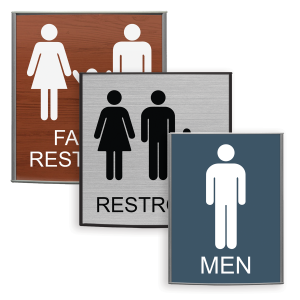
Restroom signs rarely spark excitement, however California restroom signs get more mindshare than you might think. These signs become important in many areas, including accessibility law, everyday usability, and the overall impression of your space. When done correctly, no one notices, but when they’re not, it’s a problem.
Being a California-based sign company, if you are responsible for a commercial space, choosing California restroom signs is less about checking a box and more about making a sound operational decision. The simple goal is to keep your space compliant, intuitive, and professional without overcomplicating the process.
Why Restroom Signs Matter More in California
California approaches accessibility with a sharper edge than most states. Enforcement is consistent, and restroom signage is one of the most common inspection points. Inspectors focus here because restrooms serve everyone. Employees, clients, and the general public all rely on them. That reality changes how you should think about signage. A restroom sign is not decorative. It is functional infrastructure. It signals whether your business understands its responsibilities or treats compliance as an afterthought.
Public restroom signs, in particular, tend to attract closer scrutiny. They must work clearly for a wide range of users while meeting specific technical standards. When they do, they quietly support a smooth experience. When they do not, they become a liability.
Making Sense of California Restroom Sign Compliance
ADA compliance sounds intimidating at first. The language feels technical, and the consequences feel serious. In practice, the rules are more practical than they appear once you understand their purpose. California restroom signs must include raised tactile characters and CA Grade 2 Braille. The text must be readable by touch and by sight. Fonts should remain simple and legible. Contrast between text and background must be strong enough to support low-vision users.
Placement matters just as much as design. Restroom door signs typically belong on the latch side of the door, mounted at a specific height range. A sign that looks correct but sits in the wrong location can still fail inspection. When businesses struggle with compliance, it is usually because of small missteps rather than major oversights. Understanding the basics early prevents those problems.
Choosing California Restroom Signs That Hold Up Over Time
California restroom door signs take more abuse than most interior signage. Cleaning crews wipe them down daily, moisture lingers in the air, and people touch them constantly. Over time, cheap materials and poor fabrication will cause deterioration of the signs. Thin plastics warp, printed surfaces fade, and Braille dots lose definition or fall out. Aluminum, acrylic, and photopolymer signs maintain sharp tactile features and resist damage. They also tend to look more natural in professional environments.
Restroom door signs should feel permanent, even if your space changes. That sense of durability communicates stability to anyone who walks through your doors.
Design Choices That Support, Not Distract
Design still matters, even with strict rules in place. A good restroom sign blends into its surroundings while remaining easy to read.
Restroom signs for business environments usually work best when they follow the same visual language as the rest of the space. Clean lines, neutral finishes, and consistent proportions help signage feel like part of the architecture rather than an add-on. Our Vista System product line is specifically designed to maintain a consistent look and feel throughout a building or campus.
High contrast plays a critical role, specifically with readability. Many California businesses achieve compliance with muted palettes that still meet accessibility standards, assuming the minimum color contrast standards are met. Here’s a simple ADA Color Contrast Guide to illustrate the point.
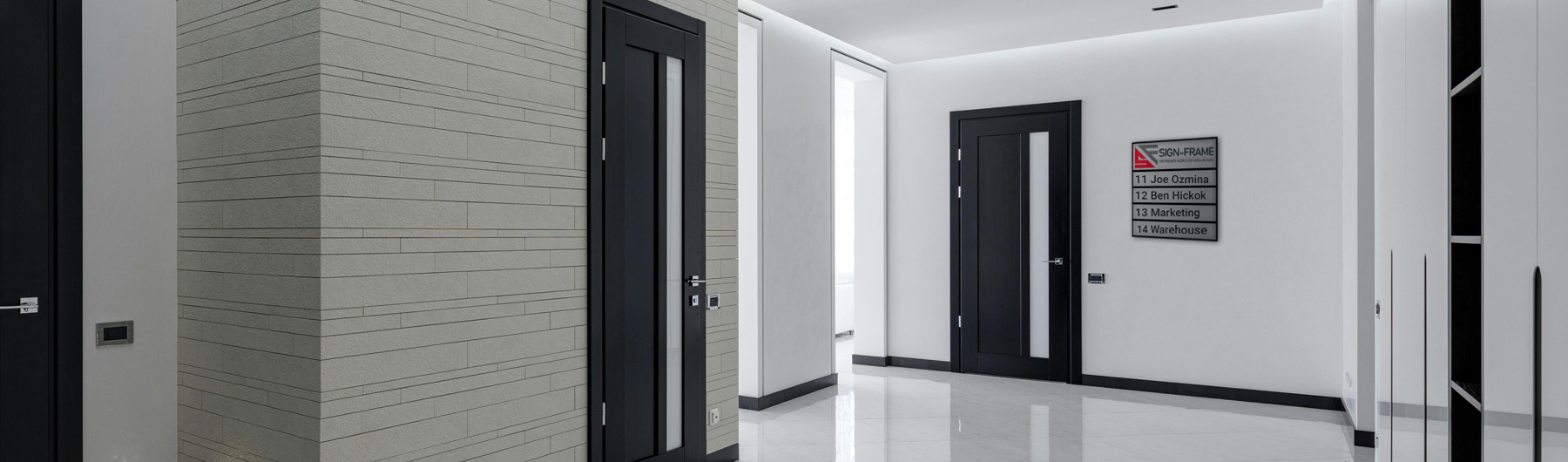
When restroom signs match directories, room identification, and wayfinding signs, the space feels organized and builds confidence, even if visitors never consciously register it.
California Restroom Signs and the Bigger Wayfinding Picture
Not all restroom signs live on doors. In larger facilities, signs for restrooms often appear in hallways, near elevators, or at decision points where people choose a direction. Typically, these are referred to as hallway signs, flag signs, or blade signs.
Restroom signs with arrows serve a different purpose than door signs. They reduce friction, prevent wandering, and mitigate interruptions at the reception desk. Clear arrows, readable text, and logical placement do the heavy lifting. When directional signs work well, people reach their destination without thinking about the process.
Public restroom signs benefit the most from this layered approach. Directional guidance paired with clear door identification creates a smooth, seamless customer experience.
Installation Details That Often Get Missed
In California, inspectors often flag incorrectly mounted signs. Before installation, take time to confirm the measurements and the door’s swing direction. Avoid improvising on-site, as small errors here can trigger costly corrections later. To eliminate any confusion, please refer to the California Title 24 ADA Sign Guidelines for sign specifications and installation standards.
Many business owners now choose modular systems designed to simplify installation and replacement. These systems protect walls, reduce labor, and make future updates easier. Please reach out at any time should you have questions regarding installation tips and tricks.
Common Errors That Still Cause Problems
ADA compliance for customer-facing areas is critical. Serif or decorative fonts occasionally show up in tactile lettering. Low-contrast color choices look appealing but fail accessibility standards. Signs get mounted on the wrong side of the door or too far from the frame.
Another issue involves inconsistency. Businesses replace one sign at a time without matching existing signage. Over time, styles clash. That visual fragmentation often reflects rushed decisions rather than careful planning.
Avoiding these problems usually comes down to selecting signage designed specifically for regulated environments. Generic signs adapted later tend to cause trouble.
Planning for Change Without Replacing Everything

Modular signage systems allow face inserts to change without replacing the entire sign body. Over time, this approach reduces costs and maintains consistent signage. It also minimizes disruption during renovations or tenant changes.
This flexibility proves especially valuable in offices, medical facilities, and multi-tenant buildings where change is routine rather than rare. This is true for routine changes, branding changes, remodels, or new construction.
A More Practical Way to Approach Buying California Restroom Signs
Choosing restroom signage does not need to feel overwhelming. Start with compliance, then usability, and finally design. When those three elements align, the right choice becomes clear.
California restroom signs should quietly and reliably support your business. They should meet legal standards, guide people effectively, and reflect the care you put into your space.
When you approach restroom signage with intention rather than urgency, you protect your business and improve the experience of everyone who enters your space. That attention to detail may go unnoticed most days, which is exactly the point.