
When people walk into your building, they expect to find their way without having to guess. Well-positioned hallway signs make that possible. They help staff, clients, and visitors move through your space with confidence. They also support a more organized and intentional environment. When hallway signs are planned well, they do more than direct traffic. They improve safety, support efficiency, and reduce the subtle friction that slows down a workplace.
Below are five practical reasons hallway signs matter, with insights that apply to offices, schools, clinics, churches, and other growing organizations.
1. Hallway Signs Improve Navigation and Reduce Wayfinding Friction
Every business wants people to move through its space without hesitation. When someone pauses because they’re unsure where to go next, even a small delay adds up. Hallway signs solve that problem by providing clear direction at key decision points. These include corridor intersections, long hallways, and areas with multiple adjacent rooms.
Hallway directional signs guide visitors from entry points to offices, departments, meeting rooms, and service areas. This makes the experience smoother for everyone. Even in familiar buildings, people appreciate cues that confirm they’re heading in the right direction. This is especially helpful in busy environments where employees don’t always have time to escort guests.
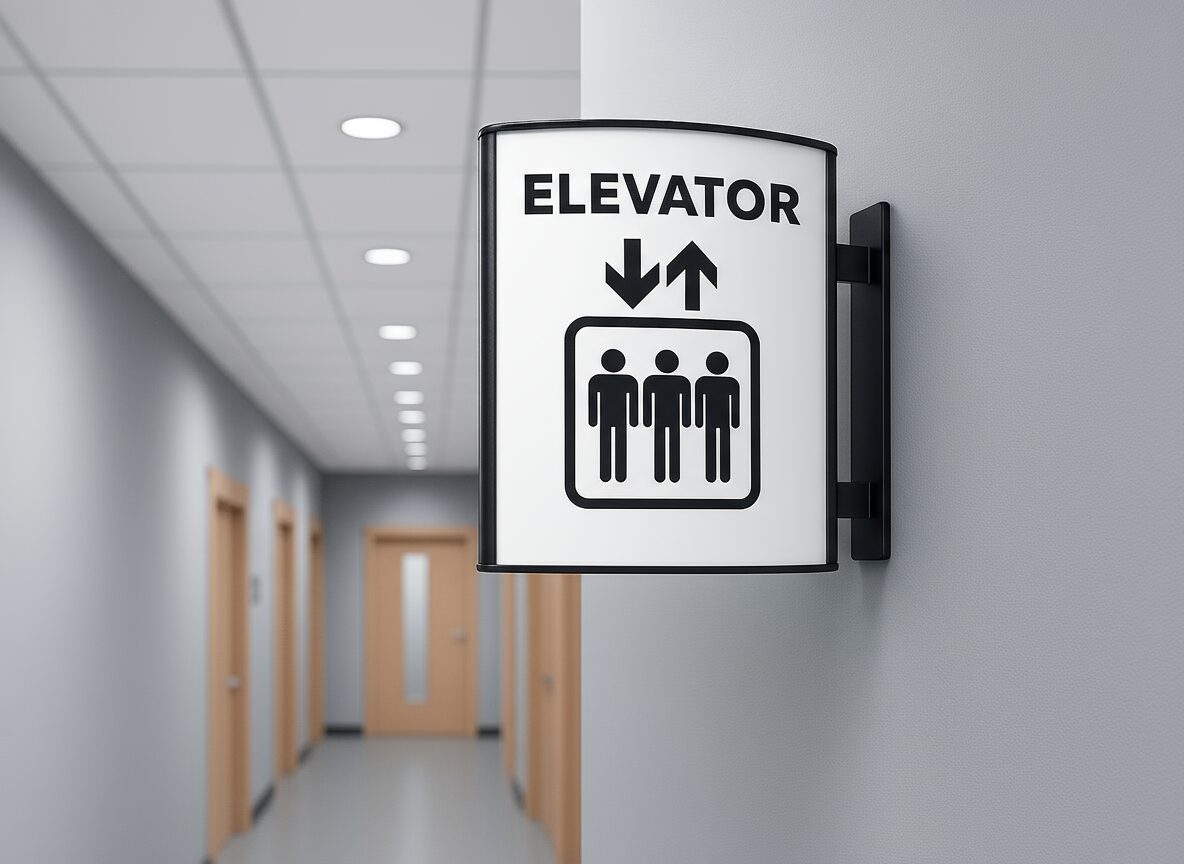
Many businesses use a mix of hallway room signs, hallway door signs, and a hallway projecting sign to ensure visibility from different angles. A projecting sign is useful when someone approaches from the side or when the hallway makes a turn. Churches also rely on church hallway signs to direct families to children’s areas, volunteers to workrooms, and guests to worship spaces. Clear signage prevents confusion and helps visitors feel welcome.
Custom hallway signs offer another advantage. They align with your building’s flow and aesthetic. When each hallway sign is designed with purpose, navigation feels natural and intuitive.
2. They Reinforce Branding and Create a Polished Impression
Wayfinding is only part of what hallway signs can do. They also help shape how people experience your brand. When signs share consistent colors, fonts, and layouts, they convey a message that your business values detail. People notice when signage is mismatched or outdated, even if they don’t mention it. It influences how they view your professionalism.
Hallway signs for offices often include subtle branding elements, such as matching colors or logo placement. This gives the space a cohesive look as visitors move from one area to the next. Small and medium-sized businesses benefit from this because it signals stability and confidence.
A hallway sign holder that works with your brand style offers flexibility. You can update inserts as room names change or departments shift. This keeps your signage current without requiring a frame replacement. It’s an easy way to maintain a polished look over time.
Church hallway signs offer another example. Churches use hallways to connect classrooms, volunteer areas, staff offices, and gathering spaces. Branded signage enhances the environment and communicates a warm, unified message to members and guests.
3. Support Safety, Compliance, and ADA-Friendly Navigation
Safety is a major part of wayfinding. Hallway signs help people quickly reach exits, stairwells, restrooms, and emergency equipment. When signs are clear, people know where to go in routine and urgent situations. This is critical in schools, clinics, and medical offices, where visitors may feel stressed or unfamiliar with the layout.
ADA-compliant hallway signs enhance accessibility for individuals with visual or mobility impairments. When hallway signs use proper contrast, tactile characters, and compliant placement, they create a more inclusive environment. A hallway sign near each door helps visitors understand the functions of the rooms without needing assistance.
Clinics and hospitals rely heavily on hallway directional signs to keep people out of restricted areas and guide them toward treatment rooms. Smaller medical practices can also benefit from this approach, improving workflow while reducing interruptions.
A hallway projecting sign can also support safety. Because it extends from the wall, it’s visible even in crowded or fast-moving situations. Quick visibility reduces hesitation, which makes navigation easier and safer.
4. Build Visitor and Customer Confidence
People feel more at ease when they understand their surroundings. Clear hallway signs help create that sense of confidence. Visitors trust the environment when they know where they’re going. They can move with certainty instead of feeling lost or unsure.
Consider a visitor in a professional office. They may not know where the reception area is or how to reach a conference room. Hallway signs for offices remove that uncertainty and help them settle in faster.
Church hallway signs offer the same support. Families want to drop off children with confidence. Guests want to move from one area to another without feeling out of place. Volunteers need to navigate the building without stopping to ask for help. Effective signage creates a predictable flow that boosts trust.
This confidence extends to your team. When visitors use hallway room signs and hallway door signs to guide themselves, staff members spend less time giving directions. They stay focused on their work, which strengthens productivity.
Custom hallway signs further enhance the experience. They match the building’s personality and show that you take pride in the details. When people notice that level of care, it strengthens their view of your organization.
5. Hallway Signs Streamline Daily Operations and Reduce Interruptions
Clear signage helps your business run more smoothly. When people know where to go, they reach their destination faster. That reduces interruptions, minimizes confusion, and keeps the day moving forward.
Many small and medium-sized businesses depend on hallway signs to direct people to conference rooms, work areas, meeting spaces, and administrative zones. In these environments, well-placed hallway signs make daily operations more efficient.
Schools and clinics see this firsthand. Students, parents, and patients rely on hallway directional signs to navigate to their destinations. Without them, staff would spend a significant amount of time pointing people in the right direction. That time adds up.
A hallway sign holder with interchangeable inserts provides flexibility as your space evolves. You can adjust room names, schedules, or department labels without needing new frames. This keeps your building organized as things change.
Even a hallway projecting sign can make a difference. When someone turns a corner, the projecting sign becomes visible immediately, reducing the likelihood of missed turns. This small improvement supports a more efficient flow.
Hallway signs also help new employees become familiar with the layout. They can navigate without relying on coworkers for constant guidance. This speeds up onboarding and reduces confusion.
The Net Result of Using Hallway Signs Effectively

Hallway signs offer more value than many businesses realize. They guide people clearly, support your brand, improve safety, and create a better experience for everyone who enters your building. They also reduce interruptions, allowing you to focus on your job and not direct traffic.
We typically start with a walkthrough or assessment with the client, but you can do it yourself. Walk your hallways, look for decision points, and identify areas where hallway signs can improve clarity. Thoughtful signage is a smart investment that strengthens your brand and supports a more efficient workplace.