Designing a Cohesive Building Signage System That Works
Understanding the key elements of a solid building signage system is imperative in today’s business world. Walk into a well-managed building, and you can tell in seconds if the signage is working. People move with confidence. They find restrooms, elevators, and offices without stopping at the reception desk. Tenants feel proud to bring clients in for a visit.
That is the result of a thoughtful building signage system. It is not just about wall signs. It is about how your building feels and how smoothly it runs each day.
If you manage facilities, property, construction, or design, you already know this. Yet signage still tends to slide to the end of the project list. By then, budgets are tight, and decisions are rushed. The outcome often looks mismatched and ages badly.
Why Your Building Signage System Deserves A Seat At The Table
Think about how many people rely on your building each day. Tenants. Staff. Visitors. Vendors. Delivery teams. Regulators. Every one of them interacts with your building signage system.
When it is clear and consistent, you notice fewer interruptions at reception. There are fewer “Where is this room?” messages. Security and front desk teams handle fewer lost visitors. You also project a stronger level of professionalism from the moment someone walks through the door.
Consider three simple examples:
A tenant brings a major client in for a presentation. The client notices the lobby directory and subsequently takes them to the elevator. They soon find the corporate office sign, arriving relaxed and focused.
A new hire comes in on day one. They can easily find HR, IT, and their workspace. Their first experience with the company feels organized and welcoming.
A contractor arrives for an after-hours job. Clear wayfinding signage leads them to the right mechanical room. Minimizing their navigation time allows them to complete their work faster and with less disruption.
In each situation, the building signage system quietly does its job. It reduces friction. It keeps people moving. It supports the perception that the property is well managed.
The Case For A Modular Sign Family
Now, let us talk about how to design for change. Buildings never stay static. Tenants expand. Suites combine or split. Conference rooms get rebranded. Policies and regulations evolve.
If you rely on one-off signs, every change hurts. It causes one to dig through old emails to find a vendor and try to match colors from years ago. You wait for proofs and production. The costs add up, and the building slowly starts to look inconsistent. A modular sign family changes that story completely.
With a modular approach, you standardize the frames, sizes, and mounting options. You set a clear visual language for interior sign system elements. Room identification, directories, tenant signs, and ADA-compliant signs are all elements within the system. Typically, this system is referred to as a uniform sign code. This sign code is the framework that maintains sign consistency throughout the building or campus.
The uniform sign code serves many purposes; however, its two primary objectives are, first, to protect the building’s aesthetic and brand. Even as tenants turnover, the property still looks intentional and well aligned. Second, it makes updates much easier to manage. You swap panels or inserts instead of replacing full signs. This is faster, cleaner, and more cost-effective over the building’s life.
I worked with a property manager who oversaw several mid-rise office buildings. Before moving to a modular signage system, every tenant change required a new set of custom signs. Lead times stretched to weeks, and budgets became untenable. Over time, the signs no longer looked the same, and the building’s aesthetics suffered.
After shifting to a modular approach, they were able to update tenant names and suite numbers in a single afternoon. The visual alignment across the portfolio improved, and the operating costs dropped.
Business Signage System and Printing Your Own Inserts
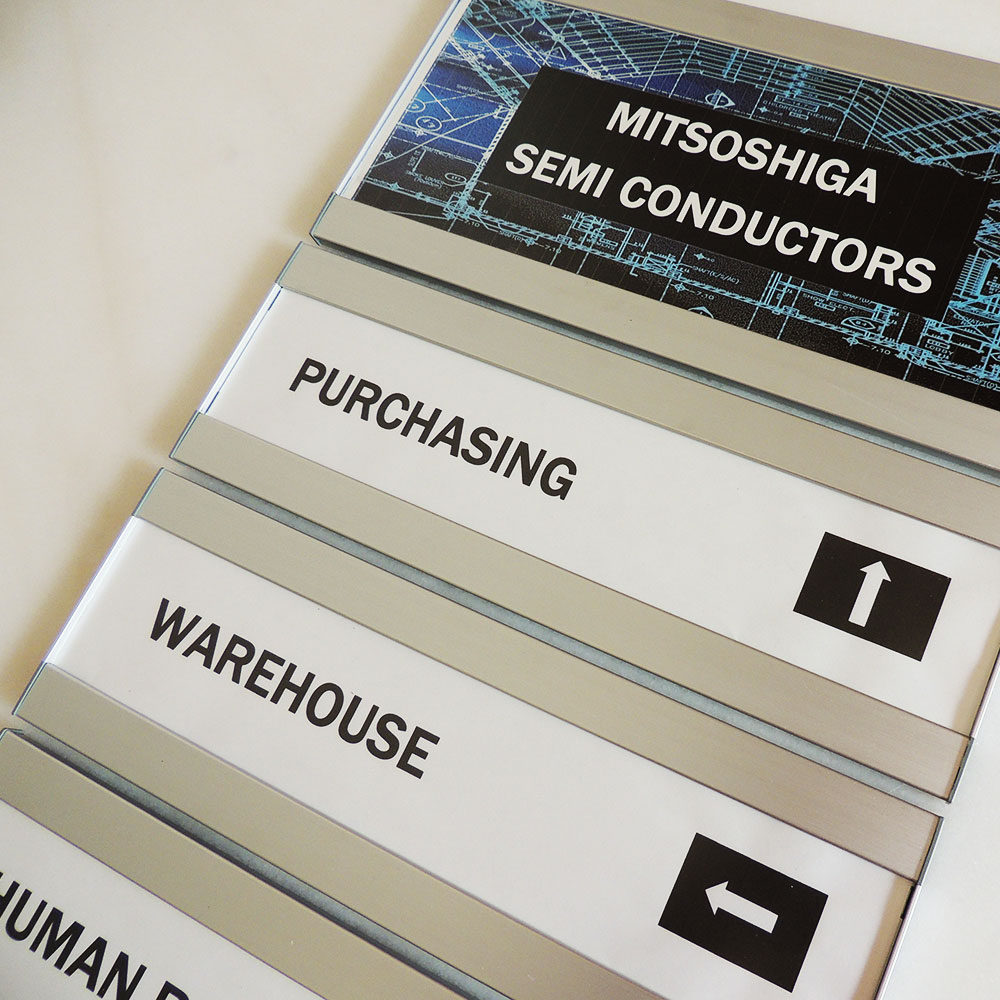
One of the most practical shifts you can make is to use sign frames with changeable inserts. Then allow your team to print those inserts in-house.
At first, this can feel risky. You may worry that quality will suffer. In reality, when it is set up correctly, it does the opposite.
Here is how it typically works.
You standardize templates for different sign types. Room names. Job titles. Tenant names. Temporary notices. Your branding and typography are locked in with your room signs. Your team only updates the text.
You use standard paper or film stock that is approved for your frames. Facilities or admin staff print inserts on office printers. They slide the old insert out and the new one in. No special tools. No mess on the walls.
The benefits show up quickly. New hires can have their names on offices or workspaces on day one. Project rooms can be re-labeled in minutes instead of weeks. Temporary wayfinding for events or construction can be created in-house. You avoid rush fees and vendor minimums.
One facilities director for a large non-profit shared that this single change cut their annual sign spend by more than a third. More importantly, they no longer had to apologize for outdated room names or taped paper signs. Their building signage system finally matched the level of professionalism they expected.
Wayfinding Signage That Respects People’s Time
A cohesive building signage system always includes a thoughtful wayfinding strategy. It is not just about more signs. It is about the right information at the right moment.
People should understand three things quickly.
Where they are now.
Where do they need to go?
How to get there in the simplest path.
Well-designed wayfinding signage anticipates decision points such as lobbies, elevators, and hallway intersections. They also consider amenities like restrooms and cafeterias.
For you, this does more than improve comfort. It reduces the soft costs of confusion. Fewer interruptions mean fewer late arrivals and fewer complaints. In environments like healthcare or higher education, good wayfinding also reduces stress at key moments.
Architects and contractors can add real value here by bringing signage thinking into the planning stages. Sightlines. Mounting surfaces. Lighting. All of these influence how effective the wayfinding will be once the building opens.
Aligning Stakeholders’ Business Signage System Values
To make all of this work, everyone must work together as the building has many stakeholders. This includes business owners, property managers, security, designers, and others. When properly aligned, successful projects start with a documented, clear standard and share it with all interested parties.
That standard usually covers basics such as color palette, materials, typography, and placement. It also includes message style, naming conventions, and rules for tenant branding within the system.
With that in place, tenant improvements, expansions, and future build-outs become much easier. Your sign vendor can reference the standard, and your contractors know mounting expectations. In addition, the leasing team can show potential tenants what their identity will look like within the building.
A consistent building signage system signals that the building is well-managed. It also protects the building’s value over time.
Infusing Character Without Losing Consistency
Implementing a uniform sign program does not mean dumbing down the building or losing historical significance. In fact, blending modular discipline with local character is hip and very beautiful.
A prime example would be a mixed-use building near a historic downtown. The modular signs follow a clean, modern structure, with local-landmark iconography. Accent colors complement nearby architecture while graphics hint at local history and culture.
The result feels rooted without becoming theme park-like. You maintain the integrity of your building signage system while still honoring the neighborhood and community. Tenants appreciate that their workplace or residence reflects its surroundings respectfully.
Building Signage System Realities
Building Signage System
A building signage system supports operations, experience, and brand. By building in flexibility and empowering teams to print inserts in-house is just the start. When you treat wayfinding as a strategic asset, you respect the time and comfort of everyone who enters the building.
If you are planning a new project or refreshing an existing property, it may help to ask:
Do our signs reflect who we are as an organization?
Can we update them quickly when something changes?
Does our building signage system make life easier for the people who use this place every day?
If the answer isn’t apparent, it’s okay to pause and revisit the approach. An investment in a smarter, more cohesive signage strategy will pay off in reduced friction, lower long-term costs, and a stronger overall impression of your asset.